.svg)
What Should Kids Learn in Grade 1?
The Wonder Year of Learning - where curiosity turns into capability.
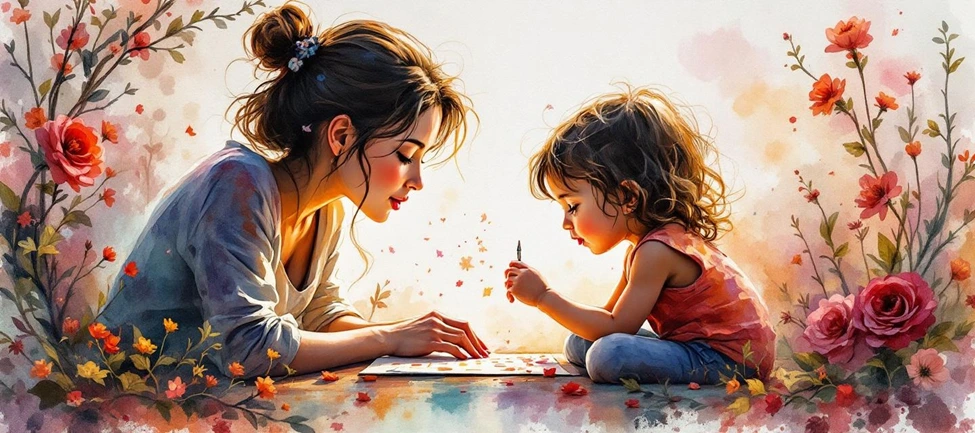
A water colouring painting of a child engaged in learning activities
Introduction: The Wonder Year of Learning
Grade 1 is where curiosity turns into capability. It is the moment when the boundless imagination of early childhood meets the first real steps of structured learning. Children enter this stage eager to explore, question, and create and it is here that their social, emotional, and cognitive skills begin to take shape in powerful new ways.
In Grade 1, students are not just learning facts; they are learning how to learn. They develop routines, strengthen focus, and start forming the habits that will guide them through their entire education journey. Friendships deepen, confidence blossoms, and a sense of independence starts to grow.
In this article, we will unpack exactly what first graders typically learn across key areas from reading and math to science, creativity, and social skills so parents and educators can better understand what this foundational year truly offers.
Reading and Literacy Skills: Building Strong Foundations
Reading is at the heart of every first grader's journey. It is the skill that unlocks every other subject, transforming letters and sounds into stories, meaning, and self-expression.
Letter Recognition and Phonics
At this stage, children move beyond simply knowing the alphabet. They learn to match each letter to its sound – m says /m/, s says /s/ – and begin blending these sounds to form simple words. Phonics activities and rhyming games make this process playful and engaging, helping kids connect sound to symbol naturally.
Decoding and Comprehension
Once decoding clicks, comprehension comes next. First graders read short sentences and simple stories, gradually learning to identify the main idea, describe characters, and talk about settings and events. Retelling favorite tales like The Very Hungry Caterpillar or Frog and Toad helps them think critically and develop storytelling confidence.
Writing Basics
Alongside reading, writing begins to bloom. Children learn to form complete sentences, use sight words such as "the," "and," "said," and experiment with expressing opinions or recounting small moments from their lives. Early writing tasks like journal entries, story starters, or drawing with captions build a bridge between thought and written expression.
Literacy Building Games at Home
- Sound Hunts: Pick a letter of the day and find objects around the house that start with that sound.
- Story Builders: Create a group story one sentence at a time, letting imagination take the lead.
- Sight Word Bingo: Turn word recognition into a fun, competitive challenge.
- Mini Book Creations: Staple folded paper to make tiny storybooks your child can write and illustrate.
These early literacy experiences lay the groundwork for confident, joyful readers who see books not just as lessons but as adventures waiting to unfold.
Math Foundations: Making Sense of Numbers
Math in Grade 1 is not about memorizing formulas. It is about discovering that numbers tell stories, reveal patterns, and make sense of the world around us. At this age, kids learn that math lives in everything from counting toys to sharing snacks or spotting shapes in everyday life.
Number Sense
The journey begins with counting, recognizing, and writing numbers up to 20. Children learn to connect the abstract symbol "7" with seven real objects in front of them. Through repetition, play, and visual aids, they build the confidence to count forward and backward, laying the groundwork for understanding larger numbers later on.
Addition and Subtraction
Once numbers feel familiar, first graders start using them to solve problems. They use counters, cubes, number lines, or even their fingers to add and subtract within 10 – sometimes stretching up to 20. These early operations teach logic and problem-solving, helping children understand that numbers can be combined, separated, and represented in multiple ways.
Place Value
This is where the concept of tens and ones comes into play. Kids learn that the number 14 is not just "fourteen" but "one ten and four ones." Using physical tools like base-ten blocks or bundles of straws helps them see and feel how our number system is structured.
Geometry and Patterns
Shapes bring math to life. First graders identify, name, and draw 2D shapes like triangles and rectangles, and 3D shapes like cubes and cylinders. They also learn to recognize and extend patterns with colors, objects, or drawings, building the foundation for logical and algebraic thinking later on.
Pro Tip: How to Make Math Hands-On and Fun at Home
- Count Everything: From fruit in a bowl to stairs on the way up.
- Shape Hunt: Go on a geometry walk to find shapes in the neighborhood.
- Pattern Play: Create rhythm or color patterns using toys, blocks, or beads.
- Snack Math: Use crackers or fruit to practice sharing and subtraction in real time.
When math becomes tactile and playful, it transforms from something to memorize into something to experience, and that is where true number sense begins.
Science Exploration: Learning Through Discovery
Science in Grade 1 is all about curiosity, observing, experimenting, and asking why. It invites children to look closer at the world around them and discover how things work. Through simple investigations, kids begin to see that science is not confined to a classroom.
Living Things
Students explore plants and animals, learning what they need to live: food, water, air, and shelter. They study different habitats, compare features such as fur, feathers, or leaves, and learn about life cycles from seed to flower or caterpillar to butterfly. This early introduction to biology nurtures empathy and awareness of the natural world.
Physical Science
Children explore materials and their properties: hard or soft, rough or smooth, solid or liquid. They begin to grasp the idea that matter changes state: ice melts, water freezes, and chocolate softens in warm hands. These everyday observations form the first sparks of scientific reasoning.
Force and Motion
Pushing, pulling, rolling, and spinning, first graders explore how things move and what makes them stop. They experiment with shadows and light, noticing how movement and positioning can change what they see. Hands-on activities help them form cause-and-effect connections that underpin future physics learning.
Mini Experiments to Try at Home
- Sink or Float: Test household items in water and predict which will float.
- Shadow Chase: Trace your child's shadow in the morning and again in the afternoon to show how it moves.
- Melting Race: Compare how fast ice cubes melt in different locations such as sun, shade, or indoors.
- Magnet Hunt: Explore which objects around the house are magnetic.
Science at this stage is less about right answers and more about the thrill of discovery. Each question such as "What happens if...?" becomes an open door to understanding, creativity, and wonder.
Social Studies and Community: Understanding the World Around Us
In Grade 1, social studies is about connection, helping children see where they fit within their family, classroom, and the wider community. Through stories, discussions, and real-world examples, they begin to understand that the world is made up of diverse people, places, and traditions, all playing unique roles in making a community work.
Personal Identity and Diversity
First graders explore who they are: their families, interests, and traditions, while learning to appreciate how others may be different. Class activities such as creating "All About Me" books or family trees help children see diversity not as something distant but as something beautiful and ever-present in their everyday lives.
Community Helpers
From teachers and doctors to firefighters and postal workers, students learn about the people who keep a community running. These early lessons in civics teach respect, gratitude, and empathy, showing children that every job, big or small, has purpose and value.
Geography and Maps
Children explore simple maps and globes, identifying land, water, and landmarks while learning to follow cardinal directions: north, south, east, west. They might map out their route to school or draw a "My Neighborhood" sketch to visualize where they live and belong.
Culture and History
History comes alive through storytelling. Students hear about life long ago and compare it to today, learning how transportation, communication, and traditions have changed over time. They also discover celebrations from around the world, nurturing cultural curiosity and respect for different ways of living.
Creativity and the Arts: Expression Through Imagination
Art and creativity are essential for helping children express themselves, solve problems, and build confidence. Through color, sound, and movement, kids learn to turn imagination into something tangible and meaningful.
Art and Craft
From finger painting to clay sculpting, art time lets children explore texture, color, and form. They learn to draw and paint with growing control, experiment with different materials, and begin to talk about their creative choices. Each piece they make is a window into how they see the world.
Music and Rhythm
Music brings math, language, and coordination together in a joyful blend. Singing songs, clapping rhythms, and playing simple instruments help children develop listening skills and memory while nurturing emotional expression. Rhythm teaches teamwork and joy in shared creation.
Play and Performance
Dramatic play gives first graders a stage to explore emotions and social roles. Through pretend play, role-playing community helpers, or performing short skits, they practice empathy, communication, and cooperation, all while having fun. Movement-based learning strengthens motor skills and encourages confidence in self-expression.
Parent Tip: Encourage creativity by displaying your child's artwork proudly on the fridge, a corkboard, or even in a small home gallery. It tells them their ideas matter and reminds them that creativity is about expression, not perfection.
Social and Emotional Learning: Growing Hearts and Minds
Grade 1 is not just about letters, numbers, or facts. It is where children start learning who they are and how to be with others. Social and emotional skills are just as critical as academic ones, helping kids navigate friendships, classroom routines, and their own feelings.
Routine and Readiness
Establishing routines gives first graders a sense of security and structure. Learning to follow instructions, manage personal belongings, and participate in classroom norms lays the foundation for self-discipline and independence. These early habits make learning smoother and help children feel confident in new situations.
Teamwork and Problem-Solving
Play is practice for life. Through group games and collaborative activities, children learn to share, negotiate, and solve conflicts. They discover how to work toward a common goal, celebrate successes together, and approach challenges with patience and creativity.
Communication and Confidence
Expressing thoughts, ideas, and emotions is a key skill in first grade. Children practice speaking in full sentences, listening actively, and using both words and creative outlets, like drawing or storytelling, to share what they feel. This is how they learn to advocate for themselves and connect meaningfully with others.
Quote: "In Grade 1, children don't just learn to read, they learn to belong."
Recommended Resources and Further Reading
For parents and educators looking to dive deeper into Grade 1 learning standards, these trusted resources provide detailed, region-specific guidance:
- OECS Learning Hub – Grade 1 Curriculum Overview
- SplashLearn – What Do First Graders Learn?
- AISC Grade 1 Curriculum PDF
- Albany Schools – Grade 1 Curriculum Guide
- US School – Grade 1 Learning Standards
Tip for Parents: Explore these resources to understand the exact expectations in your region and find additional activities to support your child's learning journey at home.
Conclusion: The Start of a Lifelong Journey
Grade 1 is more than the first year of formal schooling. It is the bridge between playful curiosity and structured learning. It is where children take their first confident steps toward independence, explore new ideas, and begin to see themselves as capable learners. Every story read, number counted, experiment tried, or friendship built lays the groundwork for a lifelong love of learning.
Parents and teachers play a crucial role in this journey. Encouraging curiosity, celebrating small victories, fostering patience, and making room for creativity can transform each day into an opportunity for growth. By supporting both the heart and the mind, we help children not just succeed academically, but thrive socially, emotionally, and creatively.